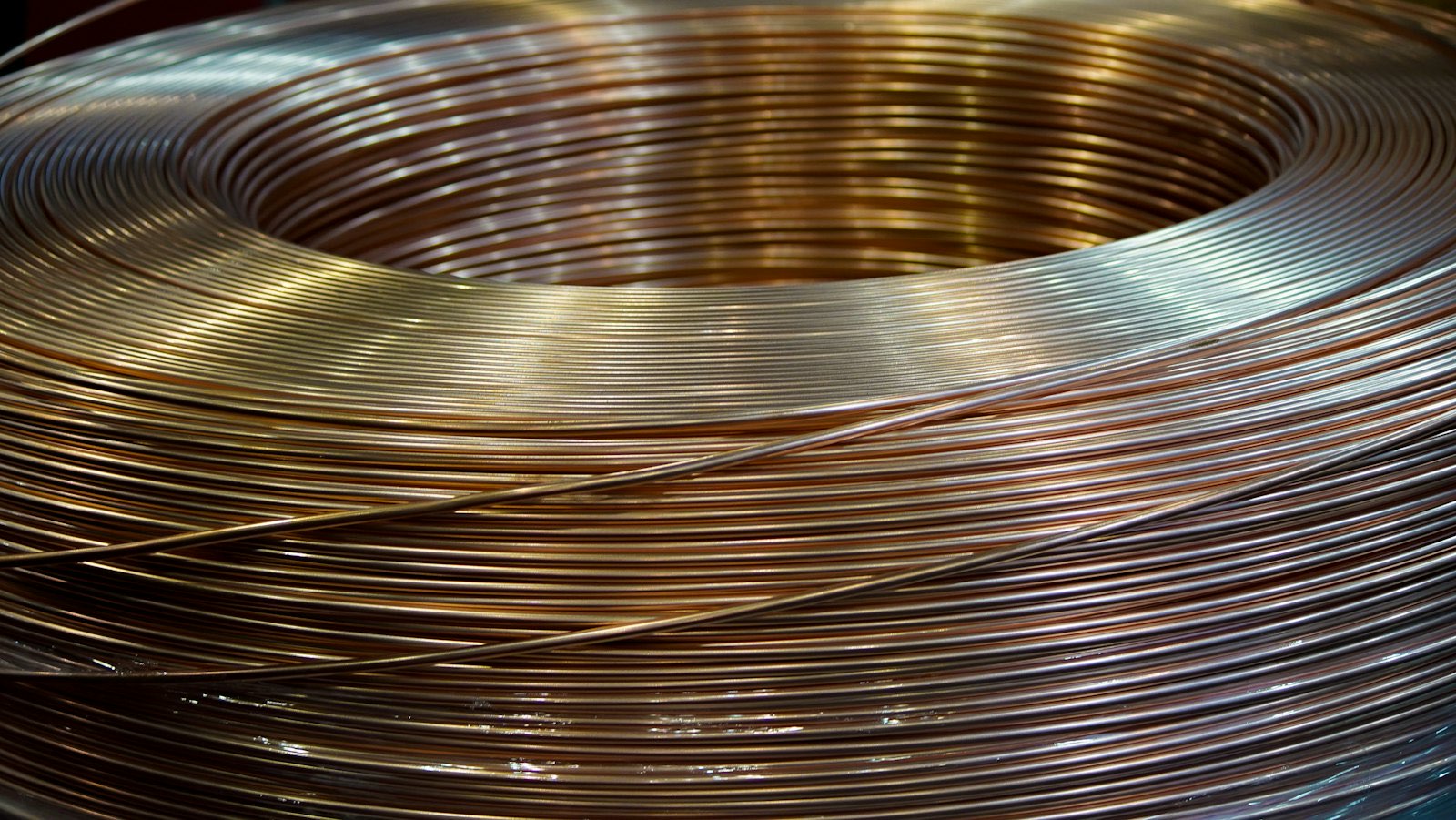
“Copper” covers several distinct materials. The right choice depends on whether the priority is electrical conductivity, weldability, formability or price — and buying the wrong type can mean a product that performs poorly or cannot be joined as intended.
Copper cathode
Cathode is refined copper produced by electrolysis, the starting material for rod, wire and semi-finished products. Grade A cathode is specified under BS EN 1978 as Cu-CATH-1, with a corresponding ASTM B115 grade. Exchange-traded copper must come from registered brands. Offers should state the brand, the assay basis and the documentation — including certificates of quality and weight.
The main copper designations
- Cu-ETP (CW004A, UNS C11000) — electrolytic tough pitch copper, at least 99.90% copper, with very high electrical conductivity. The standard choice for busbars, cables and electrical components. Not ideal for brazing or welding in reducing atmospheres because of its oxygen content.
- Cu-OF (CW008A, UNS C10200) — oxygen-free copper for applications needing high conductivity together with good weldability or vacuum performance.
- Cu-DHP (CW024A, UNS C12200) — phosphorus-deoxidised copper with good weldability and brazeability, but lower conductivity. Used for plumbing, heating and refrigeration tube.
Product standards
- Sheet, strip and plate for general purposes: EN 1652.
- Copper tube for water and gas in sanitation and heating: EN 1057 (in North America, ASTM B88).
- Bare copper wire: ASTM B3 (soft) and ASTM B8 (stranded conductors).
Temper matters as much as alloy. EN tube and sheet standards use R-designations based on minimum tensile strength (for example R220 annealed, R250 half-hard and R290 hard tube). Annealed material is easier to bend and form; harder tempers hold shape and resist damage.
How copper is priced
Copper offers are usually built from a reference market price plus a premium or fabrication charge. Key terms to agree are:
- The reference price and the quotational period (QP) — for example, the average for the month of shipment.
- The premium for cathode, or the conversion charge for semi-finished products.
- Weight tolerances and how final weights are determined.
- Payment terms and any provisional and final invoicing mechanism.
Two offers with the same headline price can produce very different invoices if the pricing period or premium differs. Always compare the full price construction.
Checklist before requesting quotes
- Product form, designation and standard (for example Cu-ETP busbar to EN 13601).
- Dimensions, temper and tolerances.
- Quantity, delivery schedule and destination.
- Pricing basis and quotational period.
- Certificates and any independent inspection or assay.